Kalaripayattu: The Complete Guide to Kerala's Martial Art
Kalaripayattu is a traditional martial art from Kerala, India, that combines combat training, physical conditioning, breath control, and healing. Practitioners train the body through structured movement sequences, progress through wooden and metal weapons, and study Marma, the vital points of the body, for both defence and treatment.
What Kalaripayattu Actually Is
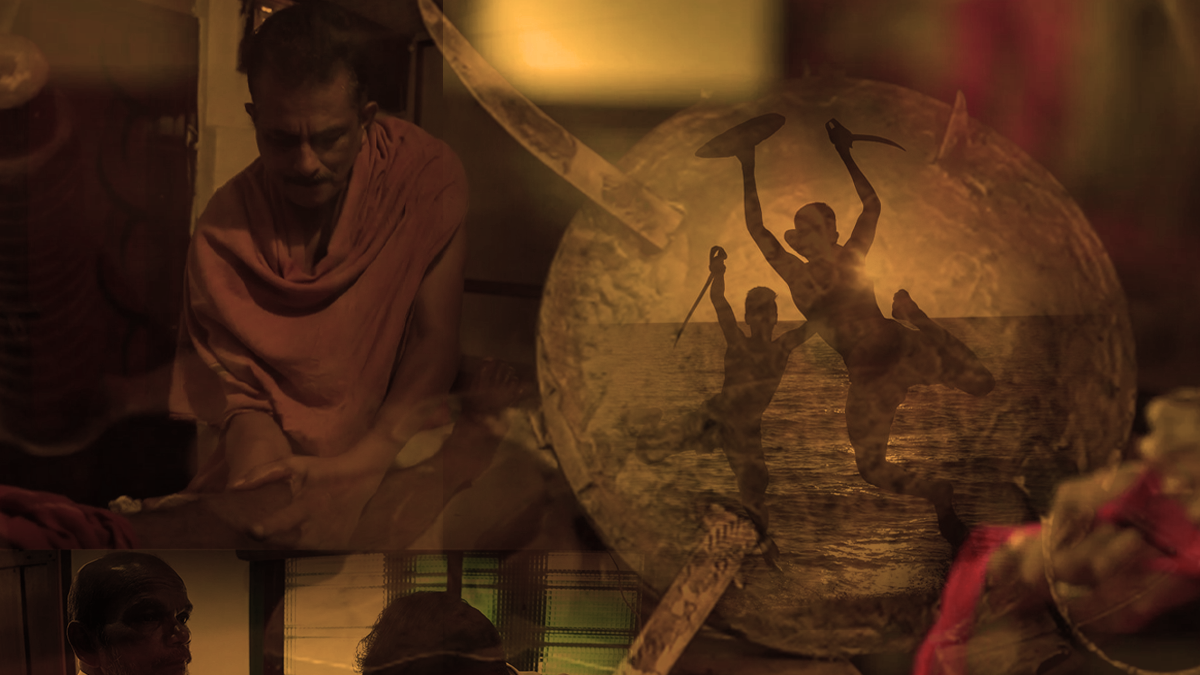
Most people meet Kalaripayattu through a photograph: a fighter mid air, sword and shield in hand, oil lamp burning in a sunken earthen pit. That image is accurate, and it is also the smallest part of the story.
Kalaripayattu is a complete system of movement, discipline, healing, self control, and leadership. It trains the body to move with precision, the mind to remain focused, and the character to act with responsibility. The art was never designed only to produce fighters. It was designed to shape human beings who could protect life, preserve knowledge, and serve the society around them wisely.
The name itself carries the meaning. Kalari refers to the training ground, the sunken pit where practice takes place. Payattu means practice, training, or combat. Put together, the word describes not a set of techniques but a place where a person is made.
Kalaripayattu at a Glance
- Origin
- Kerala, South India
- Meaning
- Kalari, the training ground. Payattu, practice or combat training.
- Foundation practice
- Meypayattu, the body sequences
- Classical stages
- Meythari, Kolthari, Angathari, Verumkai
- Weapons
- Long staff, short stick, otta, dagger, sword and shield, urumi
- Healing science
- Marma, the vital points of the body
- Path to mastery
- Roughly twelve years
- Teaching model
- Guru to student, inside the kalari
Where Kalaripayattu Came From
According to the traditional philosophy behind the art, its origins lie in close observation of nature, and especially of animals.
The early masters watched how creatures moved. They studied strength, agility, balance, courage, and raw survival instinct. From those observations they built postures and movements that trained the human body to become stronger, more flexible, and more capable. The animal postures that survive in Kalaripayattu today are not decoration. They are compressed lessons in how a living body generates power and stays alive.
Combat itself evolved alongside human development. People first fought with what the ground gave them: stones, sticks, animal horns. Later they discovered fire, and eventually learned to work metal into weapons. The training system grew in step with those tools, which is why the curriculum still moves in the same order, from wood to steel.
Meypayattu: Where Every Student Begins
Mey means body. Payattu means training or combat. Meypayattu is therefore body training, though that translation undersells it badly.
Meypayattu is the process of conditioning body and mind to work as one unit. Every sequence develops coordination, flexibility, balance, spatial awareness, strength, breath control, and mental focus at the same time. Nothing is isolated. A student does not train flexibility on one day and reflexes on another. The sequences build all of it together, because a body in combat has to deliver all of it together.
What looks like graceful movement to an observer usually contains hidden principles of attack, defence, and survival. The same low sweep that appears to be a stretch is a leg strike. Students often practise a movement for years before its combat application is revealed to them, and that delay is deliberate rather than accidental.
The Training Progression
Kalaripayattu follows a carefully designed sequence. The order is not tradition for its own sake. Each stage builds a specific capacity that the next stage assumes you already have.
| Stage | Malayalam name | What is trained |
|---|---|---|
| 1. Body | Meythari or Meypayattu | Conditioning, flexibility, balance, breath, stances, animal postures |
| 2. Wooden weapons | Kolthari | Long staff, short stick, otta. Distance, timing, coordination |
| 3. Metal weapons | Angathari | Dagger, sword and shield, spear, urumi. Precision under real risk |
| 4. Empty hand | Verumkai | Strikes, locks, throws, and application of Marma knowledge |
Why the Long Stick Comes First
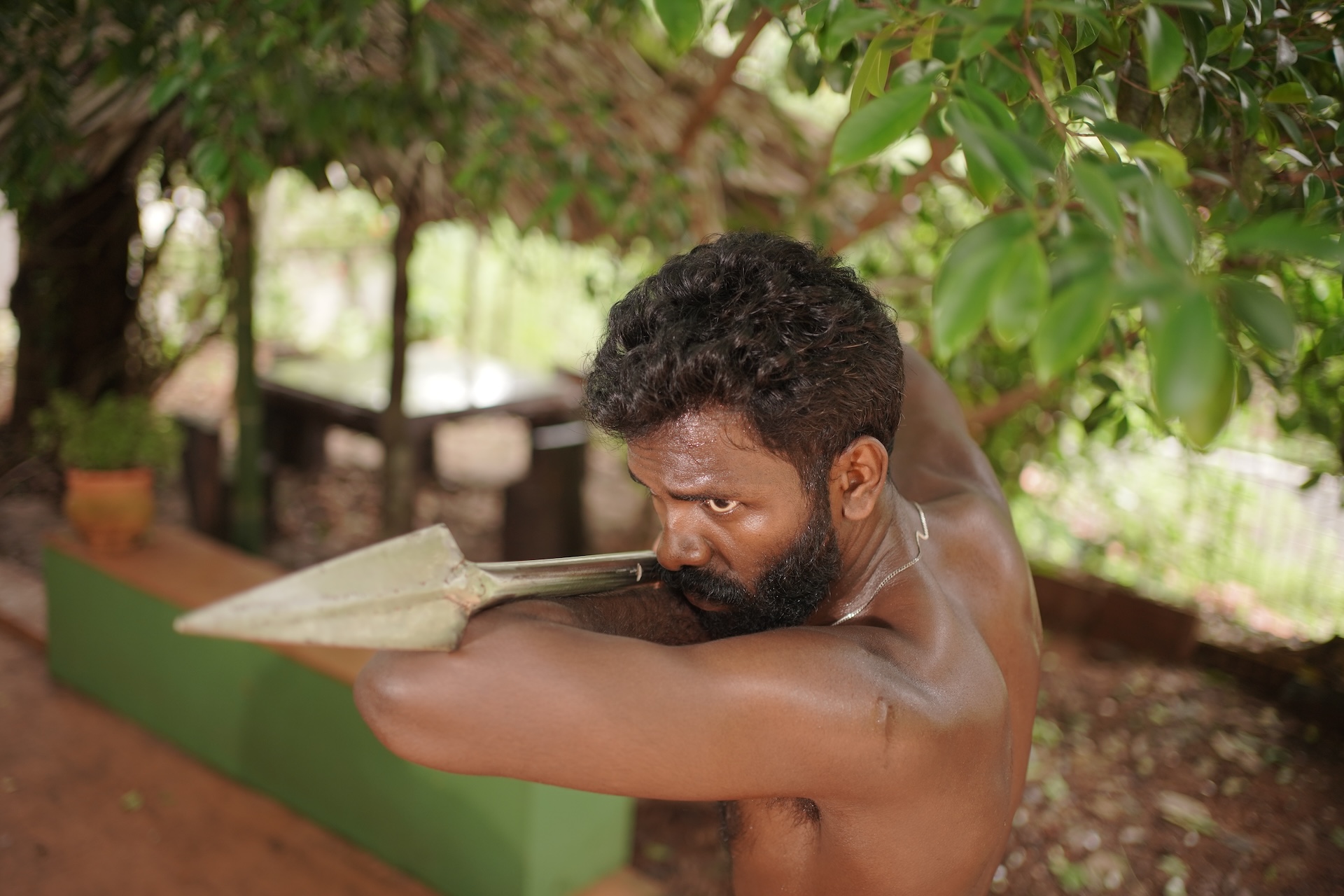
Students begin with the long stick because it is safer and easier for a beginner to read. Length gives you room to make mistakes. A student holding a long staff can misjudge distance and still be corrected before anything goes wrong, which makes it the ideal tool for learning distance, timing, and whole body coordination.
Then the Short Stick
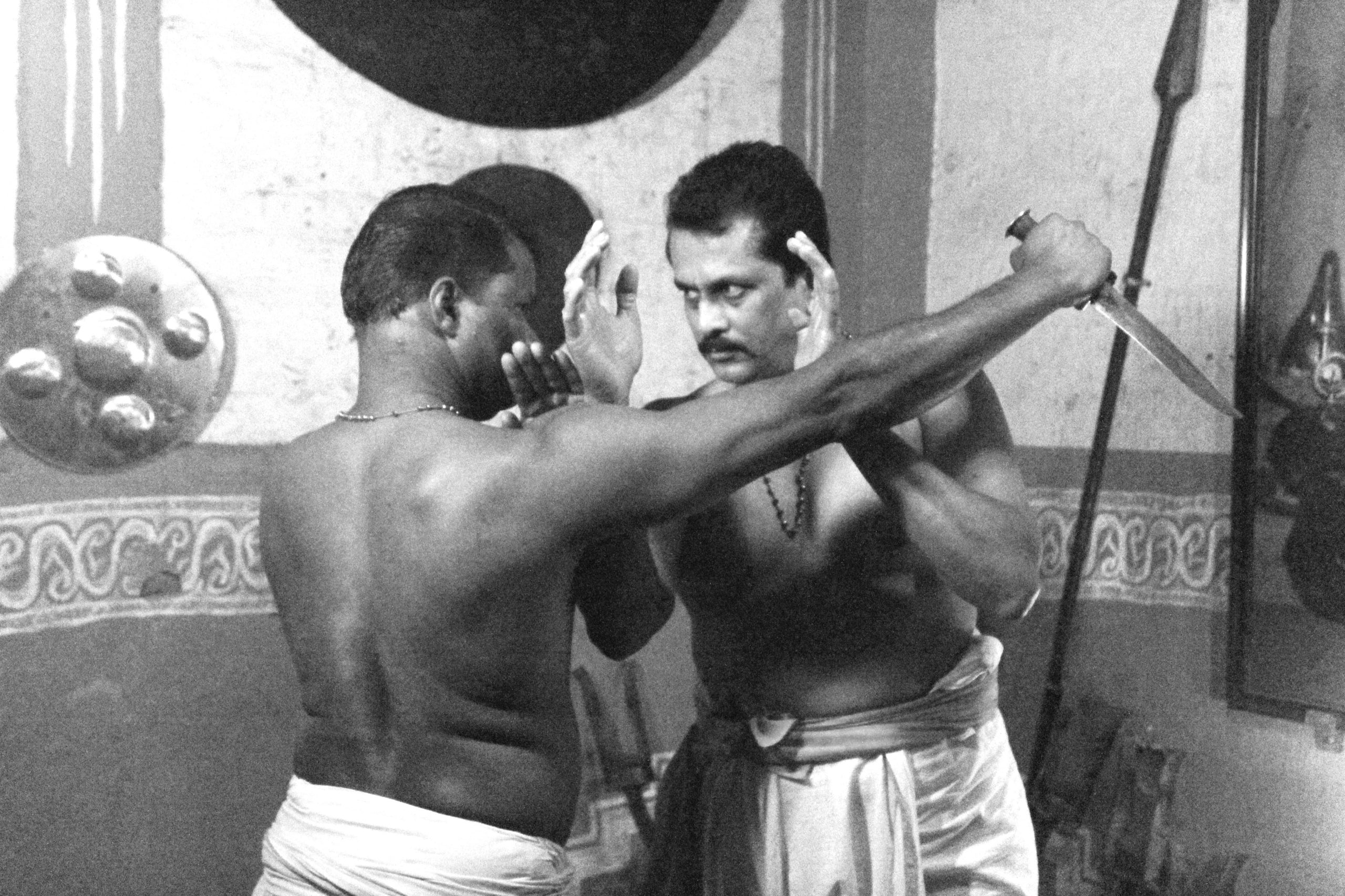
Short sticks bring the fight close. At that range there is no margin, so training develops speed, concentration, precision, eye contact, and fast decision making. The student learns to read intention in an opponent’s eyes rather than in their weapon, and that skill carries directly into every stage that follows.
Only after these foundations are secure does a student progress to sharp weapons, and finally to empty hand combat, which is the last stage rather than the first. By the time a practitioner fights with bare hands, they have already learned everything the weapons had to teach about angle, timing, and control.
Marma: The Same Knowledge Heals and Harms
Alongside weapon training, students learn the science of Marma, the vital points of the body.
This is the part of Kalaripayattu that separates it from most combat systems in the world. The same map of pressure points, nerve junctions, and energy channels that tells a fighter where a strike will disable an opponent also tells a healer where pressure will release a locked joint or restore circulation to an injured limb. One body of knowledge, two applications.
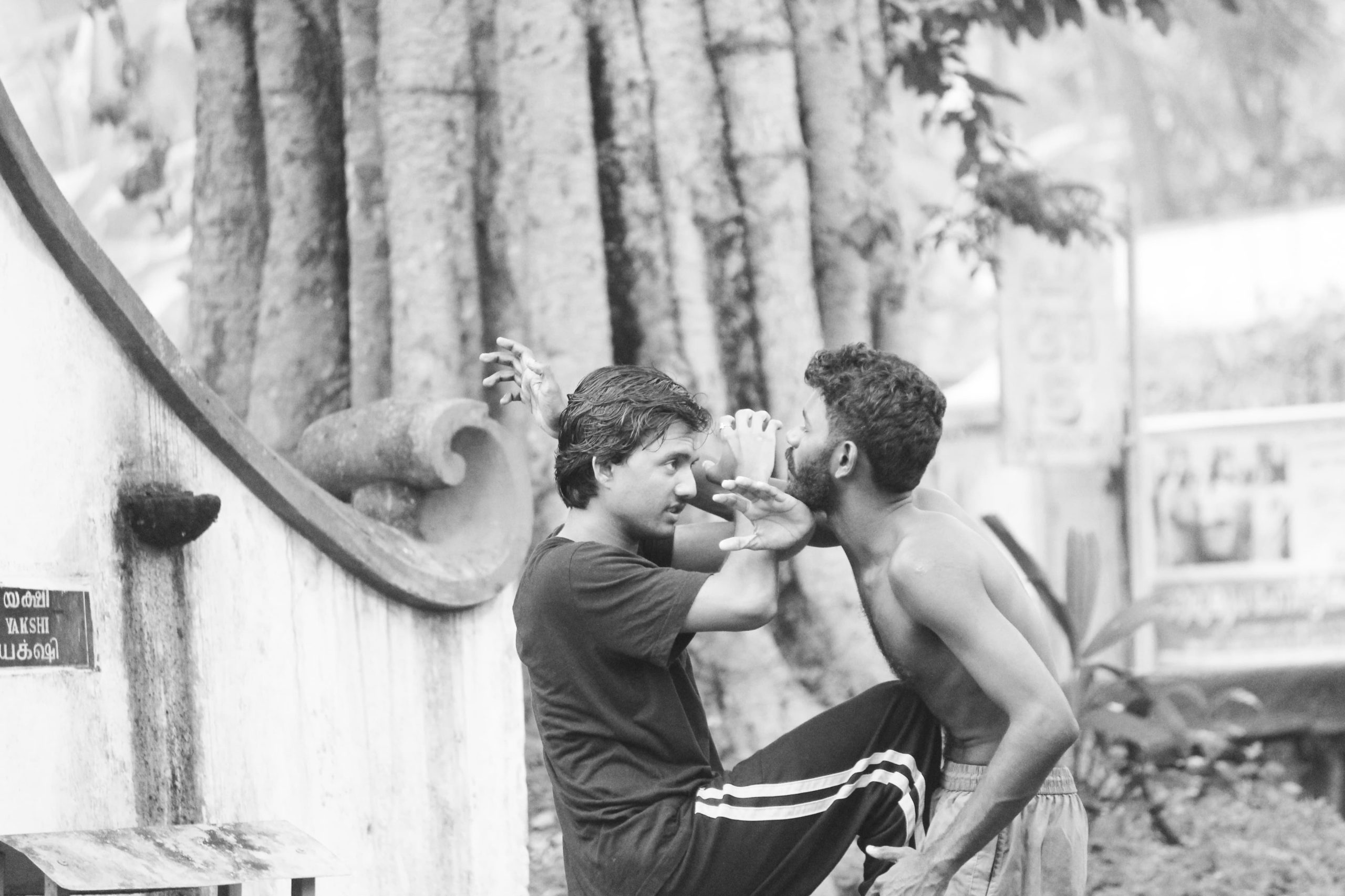
Traditional Kalari masters were therefore also traditional physicians. The kalari treated the village. Marma therapy, Kalari massage, and the Ayurvedic knowledge that surrounds them grew inside the same institution that taught people how to fight, and no student was given the striking application before they had been trained in the healing one.
That structure encodes an ethic rather than just a curriculum. Kalaripayattu teaches how to protect life alongside how to defend it.
Twelve Years, One Guru
Traditionally, mastering Kalaripayattu required about twelve years of dedicated training.
The length is the point. Twelve years cannot be shortcut, cannot be bought, and cannot be completed by someone who is only interested in the fighting. Over that period the relationship between Guru and student becomes something closer to kinship, built on trust, correction, discipline, and a commitment that runs in both directions. The Guru does not simply transmit technique. The Guru decides, year by year, whether this particular student should receive the next layer of knowledge at all.
The purpose was never simply to create fighters. It was to build fearless minds, disciplined character, and complete control over body and emotion. The goal was to send out individuals who would become responsible leaders, capable of serving the society they came from.
Why Kalaripayattu Did Not Conquer the World
Karate, taekwondo, and judo spread across the planet in a few decades. Kalaripayattu, which is considerably older, did not.
The traditional approach explains much of this. The emphasis was always on preserving the quality of the knowledge, the ethics that surround it, and the humanity of the practitioner, rather than on teaching the largest possible number of students. A system that requires twelve years, a resident Guru, an earthen pit, and a moral assessment of every student before the dangerous material is released does not scale into a global franchise. It was never trying to.
There is a cost to that, and there is also a reason the art survived British suppression with its depth intact.
What Kalaripayattu Gives a Modern Practitioner
You do not need to be preparing for combat to benefit from the training. The system builds capacities that transfer everywhere.
Physical
Mobility, functional strength, flexibility, endurance, and control of the body through unusual ranges of motion. Very few conditioning systems train a body the way Kalaripayattu does, because very few were designed for someone who had to survive.
Mental
Sustained concentration, composure under pressure, and the habit of acting decisively without panic. Close range weapon work forces a level of present moment attention that is difficult to build any other way.
Healing
Exposure to Marma and Kalari massage gives practitioners a working understanding of their own body, injury, and recovery.
Confidence
Not the loud kind. The quiet, tested variety that comes from knowing what you can do, which then shows up in work, in study, and in every difficult conversation.
About E. P. Vasudeva Gurukkal C. V. N. Kalari, Kaduthuruthy
Our centre for teaching and promoting the traditional art of Kalaripayattu carries more than seventy years of history behind it, and is now moving into its fourth generation.
At E. P. Vasudeva Gurukkal C. V. N. Kalari in Kaduthuruthy, we hold to tradition and to traditional methods, preserving the core values and heritage of the art. At the same time we continuously update our system so that it meets the requirements of students living in the modern world. Those two commitments are not in conflict. Keeping the knowledge intact and keeping it useful are the same job.
How We Train
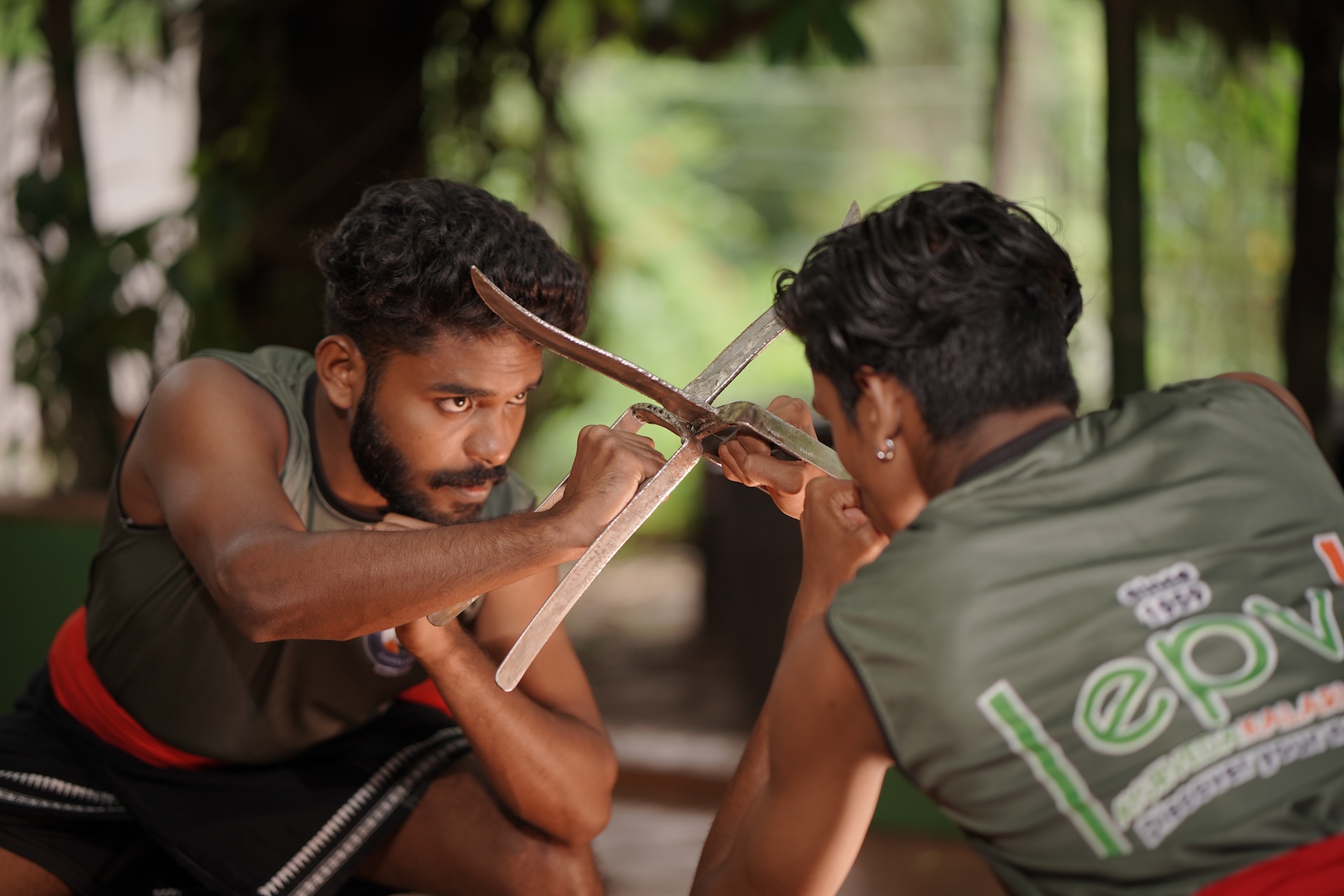
Every class begins with stretching, warm up exercises, and cardiovascular preparation, followed by yoga breathing. Only then does Kalaripayattu practice begin. The body and the mind are both prepared before anything demanding is asked of them.
Through this training, students learn to lead a disciplined way of life. Practising with weapons and combat techniques develops courage and confidence, and just as importantly it develops control and an instinct for safety. That confidence carries beyond the kalari. Students face challenges in every field of life with more skill, more courage, and clearer vision.
The Spiritual Dimension
Kalaripayattu is a complete combat system, and to many practitioners it is also a spiritual path. At our centre we conduct yoga classes and dedicated Kalaripayattu meditation sessions to support the inner growth of our students alongside their physical training.
Trained by a Doctor
Dr. Shaji Vasudeva Gurukkal (B.A.M.S.), the chief Gurukkal of this Kalari, is an Ayurvedic physician who has also trained and worked alongside orthopaedic surgeons, radiologists, and other doctors.
That medical background changes how training is delivered. He understands how to train each student safely and effectively according to her or his individual physical condition, which matters a great deal in an art that asks a lot of the body. Existing injuries, age, flexibility, and medical history are assessed rather than ignored.
Two lineages, one family
The teaching lineage at this kalari runs through E. P. Vasudeva Gurukkal, whose name the centre carries.
It is joined by a second. Nisha Shaji, wife of Dr. Shaji Vasudeva Gurukkal, is the daughter of Valappil Karunan Gurukkal, a respected master of the northern Kalari tradition from Vadakara. Their children, Soorya Deva Kiran and Chaithra Shaji, carry the bloodlines of two distinguished Kalari families and represent the fourth generation of this centre.
In an art transmitted from master to student across generations, that continuity is not a marketing detail. It is the mechanism by which the knowledge survived at all.
Frequently Asked Questions
What is Kalaripayattu in simple terms?
Kalaripayattu is a traditional martial art from Kerala that trains the body, mind, and character as a single system. It combines conditioning sequences, weapon training, empty hand combat, and Marma healing knowledge, taught inside a sunken earthen pit called a kalari.
Is Kalaripayattu the oldest martial art in the world?
Kalaripayattu is widely described as one of the oldest surviving martial arts, and Kerala tradition holds it to be the oldest. Precise dating is difficult because the art was transmitted orally from Guru to student for centuries rather than through written records.
How long does it take to learn Kalaripayattu?
Traditional mastery takes roughly twelve years. Meaningful benefits arrive far sooner. Most students see clear gains in strength, flexibility, reflexes, and focus within the first year of consistent practice.
What is the difference between Kalaripayattu and Meypayattu?
Meypayattu is the body training foundation within Kalaripayattu, not a separate art. It is the first stage every student completes before touching a weapon, and it develops the coordination, balance, and breath control that all later stages depend on.
What weapons are used in Kalaripayattu?
Training begins with the long staff (kettukari), moves to the short stick (cheruvadi) and the otta, then progresses to metal weapons including the dagger (kadara), sword and shield (val and parichaya), spear, and the flexible urumi.
Can beginners and older adults learn Kalaripayattu?
Yes. Training is adapted to each student's physical condition. At our centre, where the chief Gurukkal is an Ayurvedic physician, that assessment is medical rather than approximate, which makes the art accessible to a far wider range of ages and fitness levels than people expect.
Is Kalaripayattu a religion?
No. Kalaripayattu is a martial and healing tradition with a spiritual dimension, including rituals of respect toward the Guru and the kalari. It is practised by students of every background and requires no particular religious belief.
What is Marma in Kalaripayattu?
Marma refers to the vital points of the body: junctions of nerves, blood vessels, joints, and tissue. Kalaripayattu teaches these points for both combat and healing, which is why traditional Kalari masters were also traditional physicians.
Begin Your Training
Reading about Kalaripayattu will only take you so far. The art is transmitted body to body, inside the kalari, from a Guru who can see what you are doing wrong. Our Kalaripayattu training programmes in Kaduthuruthy cover regular batches for local students and residential courses from ten days to six months.